A complete guide to understanding costs, ROI, and why COB technology is reshaping the high-end visual market.
In the world of professional visual solutions, Chip-on-Board (COB) technology has emerged as a game-changer. However, for many project managers and business owners, the primary hesitation often revolves around the cob led display price. Why is it generally higher than traditional screens? What exactly are you paying for?
If you are struggling to balance your budget with the need for high-performance visuals, this guide will break down the cost structure of COB displays, compare them with traditional SMD options, and reveal the hidden long-term savings that often go unnoticed.
Key Factors Influencing COB LED Display Price
The price tag on a COB LED video wall isn’t arbitrary. It is a reflection of sophisticated manufacturing processes and component quality. Here are the three main drivers of cost:
1. Ultra-Fine Pixel Pitch
The “Golden Rule” of LED pricing: the smaller the pixel pitch, the higher the price. COB technology is specifically designed for pitches below P1.2 (e.g., P0.9, P0.7). Packing thousands more LED chips into a square meter significantly increases the cob led display price due to the sheer volume of materials and precision required.
2. Manufacturing Yield Rates
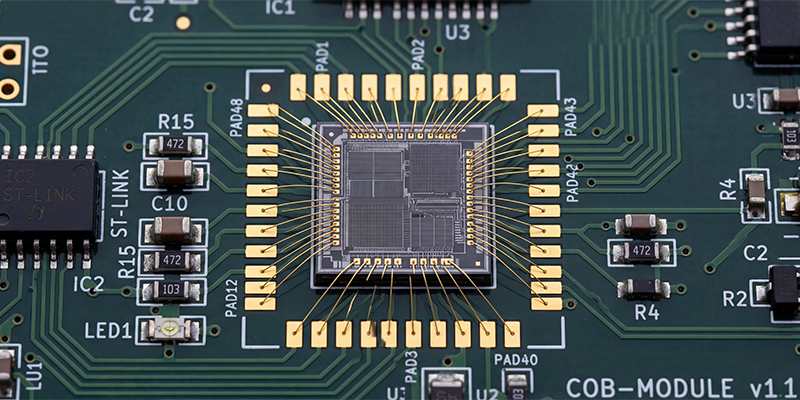
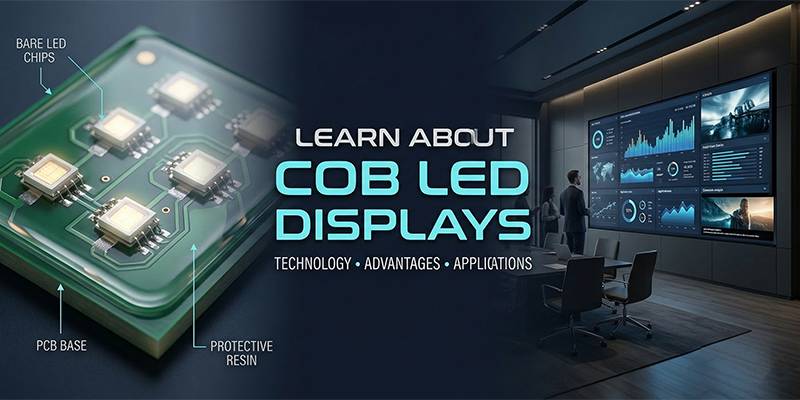
Unlike Surface Mounted Devices (SMD), COB encapsulates LED chips directly onto the PCB board. This process requires dust-free environments and high-precision equipment. While this ensures durability, the manufacturing complexity contributes to a higher initial base cost.
3. Encapsulation Materials
COB displays use advanced epoxy resins or optical films for protection. These materials provide water, dust, and impact resistance (often rated IP54 or higher). High-quality encapsulation that prevents yellowing over time adds to the premium pricing.
Price vs. Value: COB vs. SMD
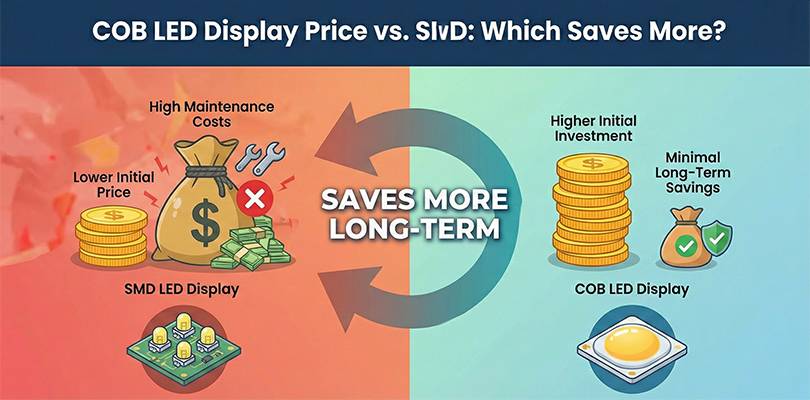
A common pain point for buyers is deciding between the familiar SMD technology and the newer COB. While the initial cob led display price is higher, the “Total Cost of Ownership” tells a different story.
| Feature | SMD Display | COB Display |
|---|---|---|
| Initial Cost | Lower | Higher (Premium) |
| Failure Rate | Higher (approx. 50-100 ppm) | Extremely Low (< 10 ppm) |
| Protection | Fragile (LEDs can be knocked off) | Collision/Water/Dust Proof |
| Maintenance Cost | High (Frequent repairs needed) | Very Low (Almost maintenance-free) |
Insight: Although the upfront cob led display price is 20-30% higher, the elimination of frequent lamp repairs and the longer lifespan often results in a better ROI over a 5-year period.
Top 3 Reasons the Price is Justified
1. Superior Visual Comfort
COB displays utilize a surface light source rather than a point light source. This effectively eliminates Moiré patterns and reduces glare. For control rooms and conference centers where people watch screens for hours, this eye protection is invaluable and justifies the premium cob led display price.
2. Incredible Durability
Accidents happen. In a busy lobby or a meeting room, a standard LED screen can lose pixels if bumped. COB screens have a smooth, hardened surface that can be wiped clean with a damp cloth and withstand impact. You are paying for “peace of mind.”
3. Energy Efficiency
Because COB chips are bonded directly to the PCB, heat dissipation is far superior. This allows the screen to run cooler and consume less power, lowering your electricity bill significantly over the display’s lifetime.
Ready to Invest in Quality?
Navigating the cob led display price range can be tricky without expert help. Don’t just look at the initial quote; consider the pixel pitch, the brand of the drive IC, and the warranty provided.
If you need a precise calculation for your project size, contact us today for a transparent quote customized to your viewing distance and budget.