Which LED Wall is Best for My Church?
Elevate your congregation’s engagement, ensure crystal-clear live stream broadcasts, and overcome the limitations of traditional projectors. Discover the ultimate visual solution tailored for modern sanctuaries, from standard SMD screens to revolutionary COB LED technology.
The Challenges of Traditional Church Visuals: Why It Is Time to Upgrade
For decades, houses of worship have relied on standard projectors or early-generation screens to display lyrics, sermons, and announcements. However, as ministries grow and digital integration becomes essential, these legacy systems present significant hurdles that disrupt the worship experience.
1. The Ambient Light Struggle
Sanctuaries are increasingly designed with beautiful natural light in mind, featuring large windows and skylights. Traditional projectors simply lack the brightness (nits) to compete with sunlight. This results in washed-out lyrics, dull videos, and a congregation straining to read the sermon notes during morning services.
2. Live Streaming and Broadcast Moiré
Since the shift to online and hybrid services, high-quality broadcasting is no longer optional. When camera lenses capture standard projectors or low-refresh-rate LED screens, they often capture severe flickering, scan lines, or the dreaded “moiré effect” (wavy, distracting lines across the screen), entirely ruining the broadcast quality for remote viewers.
3. High Maintenance and Fragility
Projector bulbs burn out quickly and are notoriously expensive to replace. Furthermore, early-generation LED screens feature exposed pixels. In a dynamic church environment—with moving bands, choirs, and youth groups on stage—accidental physical impacts can easily knock off these delicate diodes, leading to unsightly dead pixels and costly repairs.
4. Visual Fatigue and Glare
Standard LED displays emit light from distinct point sources. When stared at for a prolonged 90-minute or two-hour service, this intense, pixelated glare can cause severe eye strain and fatigue among the congregation, detracting from the spiritual message being delivered.
The Modern Solution: Direct View LED Walls for Churches
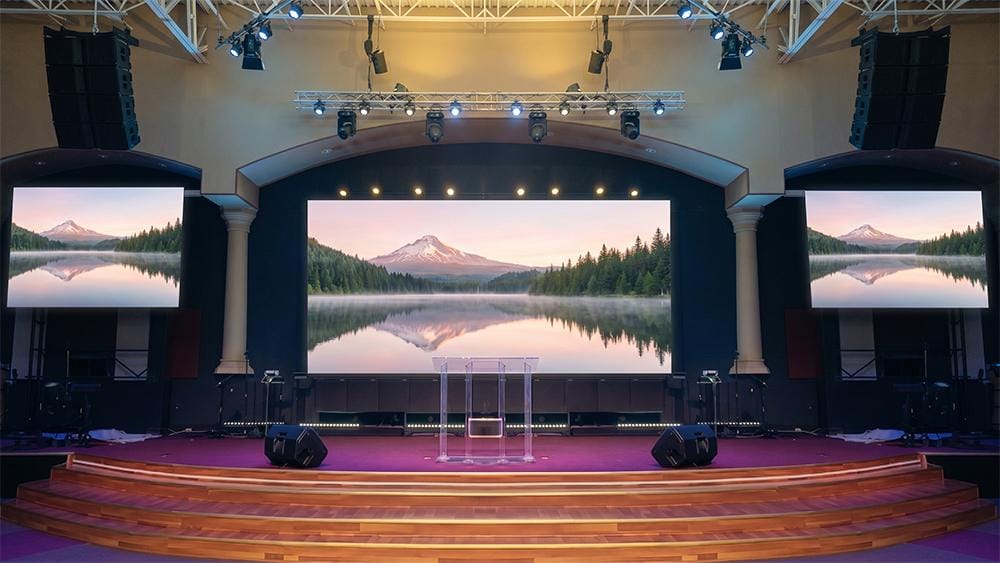
To solve these pain points, modern ministries are pivoting to Direct View LED Video Walls. Unlike projection, which reflects light off a surface, LED walls emit their own light. This guarantees vibrant colors, deep blacks, and perfect visibility regardless of how much ambient light floods your sanctuary.
However, not all LED screens are created equal. When planning your stage design, technical directors and church committees must make a critical choice regarding the core technology of the screen. The two primary options dominating the market today are SMD (Surface Mounted Device) and COB (Chip on Board). Understanding the difference is crucial for your long-term investment.
Making the Right Choice: SMD vs. COB LED Displays
Understanding SMD (Surface Mounted Device) Technology
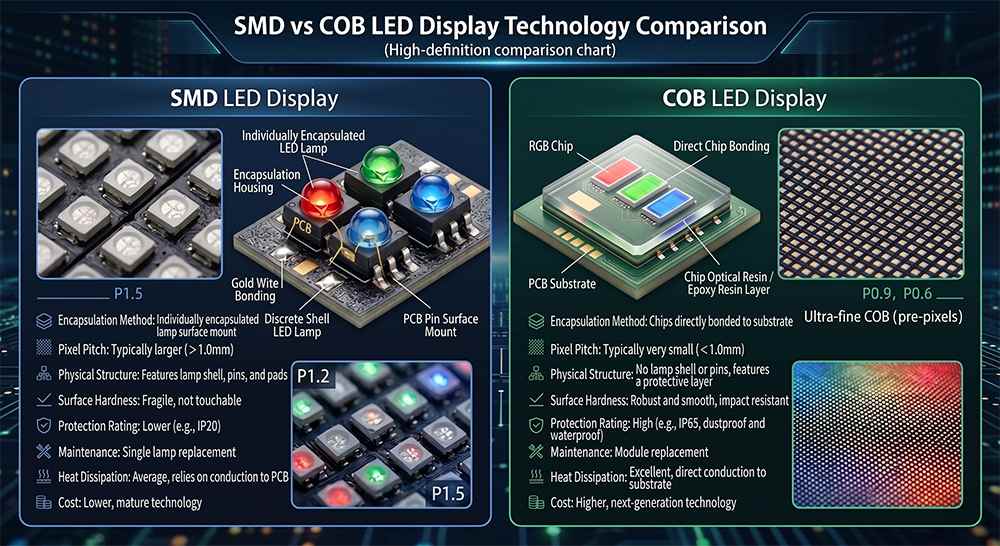
What is it? SMD has been the industry standard for over a decade. In an SMD screen, individual LED diodes (containing red, green, and blue chips) are enclosed in a tiny plastic cup and physically soldered onto the surface of a printed circuit board (PCB).
Pros for Churches:
- Cost-Effective: Because the technology is mature and widespread, SMD screens generally offer a lower initial purchase price, making them accessible for smaller church budgets.
- High Brightness: SMD screens can achieve incredibly high brightness levels, making them suitable for semi-outdoor environments or sanctuaries with extreme sunlight.
- Easy Pixel Replacement: If a single diode fails, a trained technician can often desolder the broken pixel and solder a new one onto the board.
Cons for Churches:
- Fragility: The diodes protrude from the board. They are vulnerable to being knocked off by mic stands, instruments, or accidental bumps on stage.
- Visual Graininess: At closer viewing distances, the individual pixels are visible (point-light source), which can lead to eye fatigue.
- Moisture and Dust Vulnerability: The exposed solder joints can degrade over time in humid environments.
Understanding COB (Chip on Board) Technology
What is it? COB represents the cutting-edge evolution of LED manufacturing. Instead of packaging chips into individual diodes, the naked LED chips are directly bonded to the PCB. The entire board is then encapsulated under a protective layer of advanced epoxy resin. This transforms the screen from a collection of tiny dots into a smooth, unified surface.
Pros for Churches:
- Unmatched Durability: The resin coating makes COB screens virtually indestructible against everyday stage impacts. They are shock-proof, dust-proof, and moisture-resistant.
- Superior Visual Comfort: COB creates a “surface light source” rather than a point light source. The light is diffused evenly, eliminating harsh glare and protecting the congregation’s eyes.
- Broadcast Perfection: With incredibly high contrast ratios, deep true blacks, and a matte finish, COB screens are immune to the moiré effect on cameras, ensuring flawless live streams.
Cons for Churches:
- Initial Investment: As a premium, next-generation technology, the upfront cost of COB is higher than traditional SMD.
- Module-Level Repair: While incredibly rare to break, if a pixel does fail, the encapsulated nature means the whole module usually needs to be swapped rather than just a single pixel soldered.
| Feature | Standard SMD LED | Advanced COB LED |
|---|---|---|
| Light Source Type | Point Light (Visible Pixels) | Surface Light (Smooth & Blended) |
| Physical Durability | Low (Exposed diodes can be knocked off) | Extreme (Encapsulated, crash-proof, waterproof front) |
| Camera / Broadcast Quality | Good (May require high refresh rate to avoid scan lines) | Flawless (Matte surface, zero moiré, perfect contrast) |
| Eye Comfort (Congregation) | Moderate (Can be glaring over long periods) | Excellent (Soft, diffused light reduces eye strain) |
| Initial Cost | Lower / Budget-Friendly | Higher Premium Investment |
| Maintenance / TCO | Higher ongoing repair costs due to physical damage | Ultra-low maintenance, longer lifespan offsets initial cost |
Why COB LED is the Ultimate Future-Proof Choice for Churches
While SMD provides a great entry point, churches looking for the absolute highest quality of worship presentation, lowest failure rates, and best broadcast capabilities are moving definitively toward COB technology. Here is an in-depth look at the unique advantages COB brings to the sanctuary.
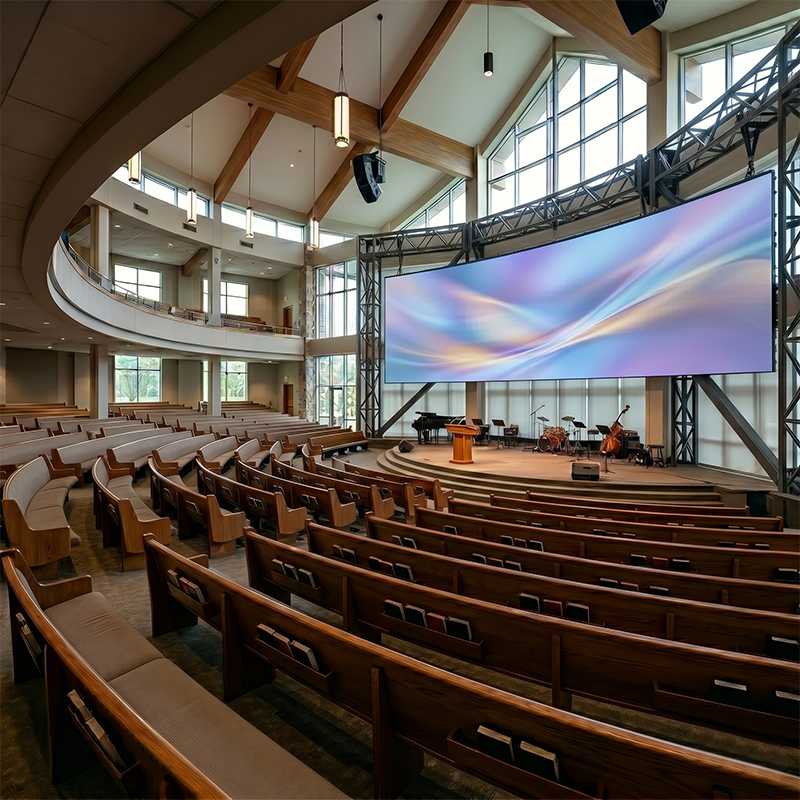
1. Ultra-Wide Viewing Angles & Perfect Uniformity
In wide sanctuaries with semi-circular seating, congregants sitting on the far left or right often suffer from color shifting or diminished brightness when viewing traditional screens. COB screens, devoid of the plastic cups that house SMD diodes, offer a genuine 170°+ viewing angle both horizontally and vertically. The color saturation and brightness remain perfectly uniform, ensuring that every seat is the best seat in the house for reading scriptures and viewing sermon illustrations.
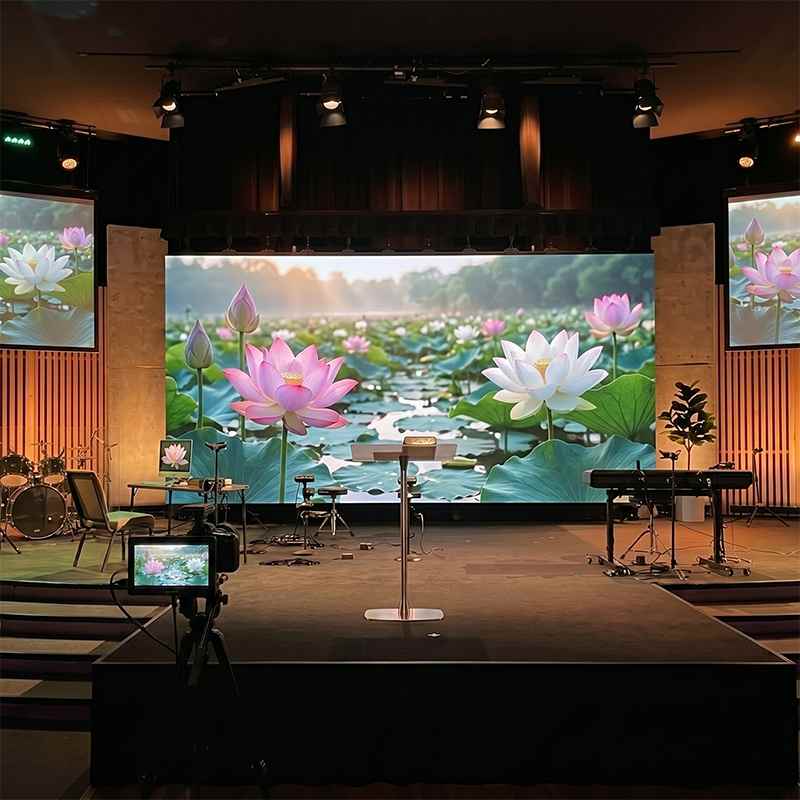
2. The End of Camera Moiré (Broadcast Perfection)
Online viewership is an extension of your ministry. The optical resin coating on COB modules diffuses the harsh point-light, creating a matte, non-reflective surface. When combined with ultra-high refresh rates (typically 3840Hz to 7680Hz), camera sensors easily synchronize with the screen. This completely eliminates the distracting wavy interference patterns (moiré effect) that plague traditional LED walls during live streams. Your online audience will see text and video as clearly as if they were in the room.
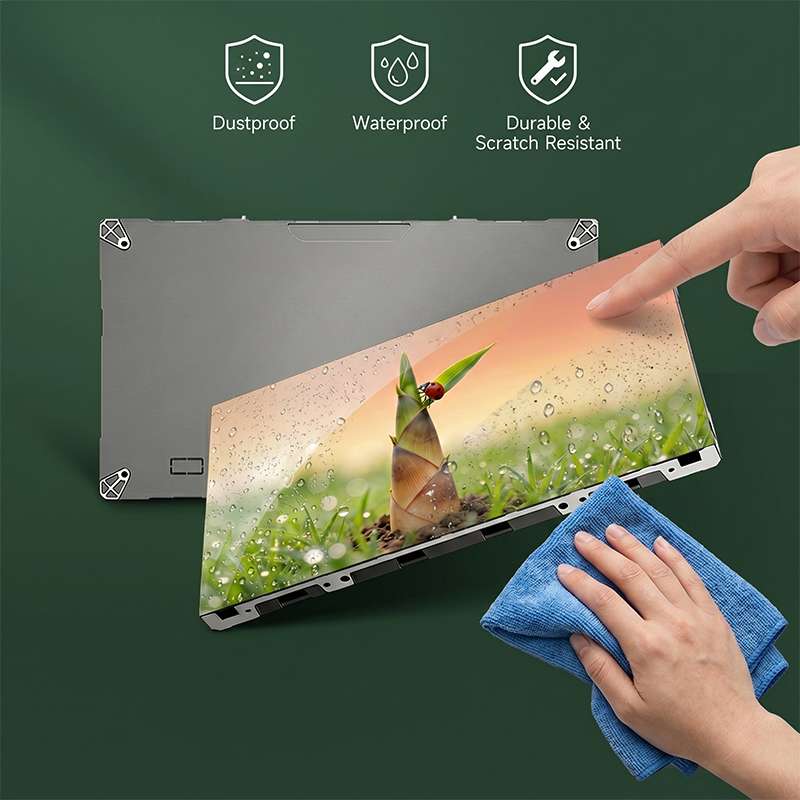
3. Unprecedented Physical Resilience (The “Crash-Proof” Screen)
Church stages are high-traffic areas. Drum kits, microphone stands, cables, and youth group activities pose a constant threat to fragile screen edges. COB technology encapsulates the entire circuit board and LED chips in a hardened polymer. You can physically run your hand across a COB screen—it feels like smooth glass. It is highly resistant to impacts, preventing the common issue of dead pixels appearing after weekend services. Additionally, this smooth surface is incredibly easy to clean; dust and fingerprints can simply be wiped away with a damp cloth.
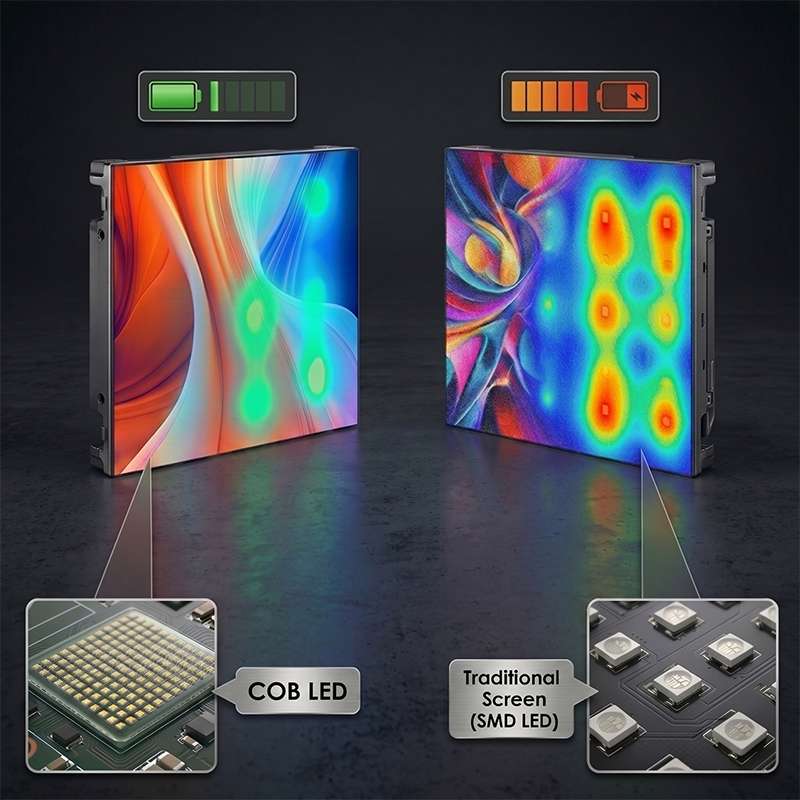
4. Energy Efficiency, Silent Operation, and Longevity
Because the LED chips are bonded directly to the PCB, the thermal dissipation (cooling) efficiency of COB is vastly superior to SMD. Heat is the number one enemy of electronic lifespan. Superior cooling means the screen operates at much lower temperatures, which not only extends the operational lifespan of the display well beyond 100,000 hours but also significantly reduces power consumption. Furthermore, this efficient heat management means COB panels run completely fanless—ensuring absolute silence during the quietest, most intimate moments of prayer and worship.
Where to Apply COB LED Displays in Your Church
The versatility of COB screens allows for creative architectural integration across your entire campus.
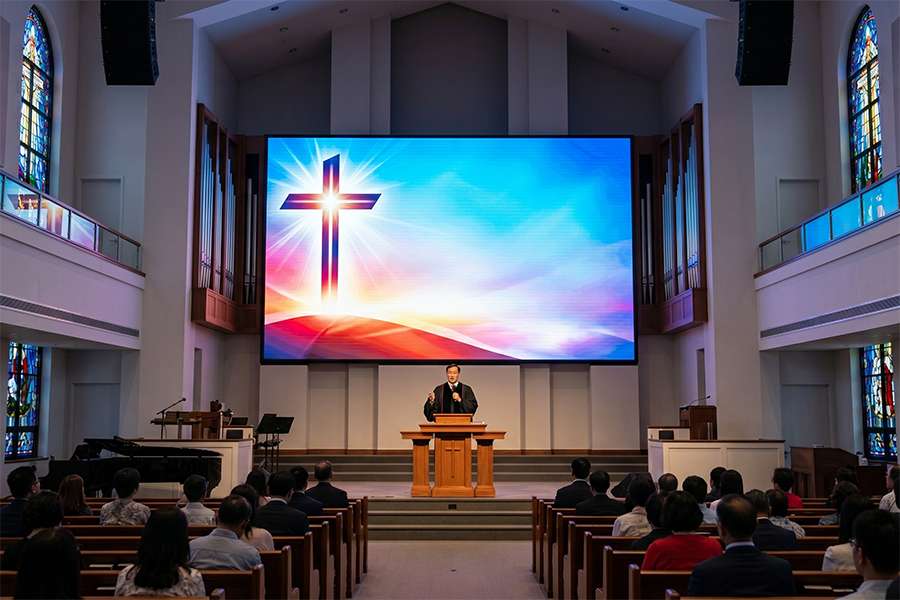
The Main Sanctuary Centerpiece
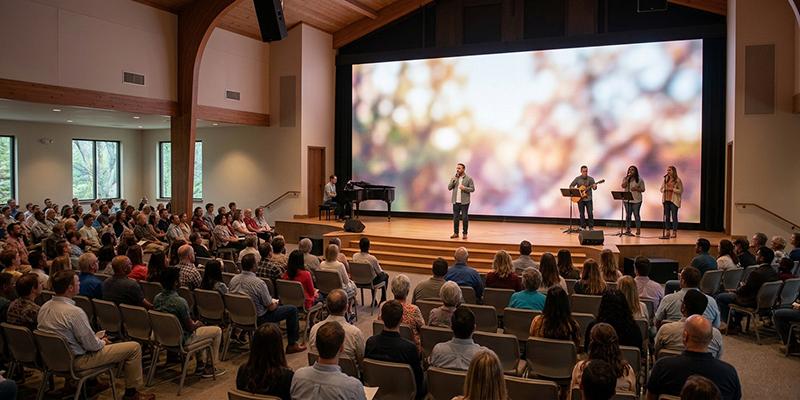
Create a massive, seamless backdrop for dynamic worship visuals, sermon illustrations, and immersive environments. Recommended pixel pitches: P1.2 to P1.8 for ultimate clarity.
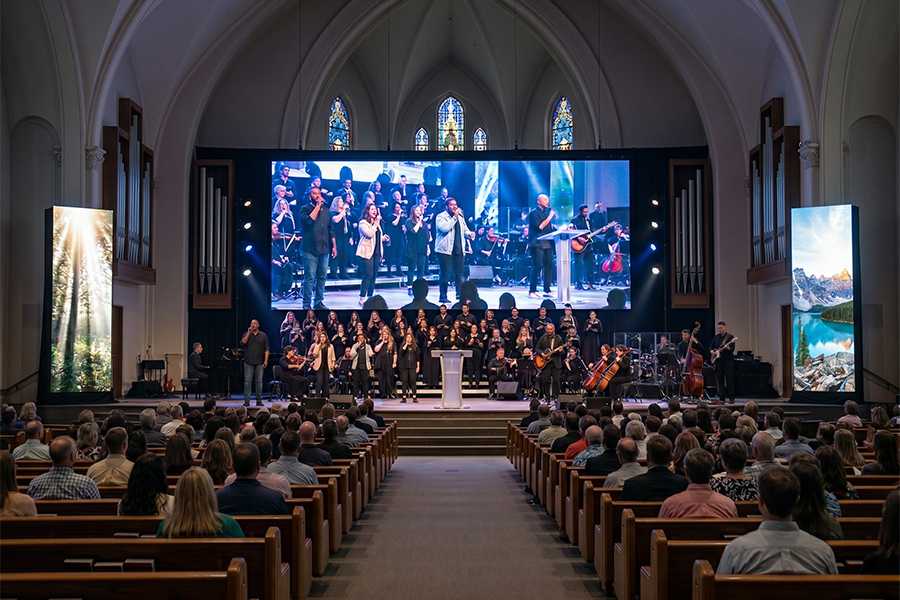
Side IMAG & Lyric Screens
Ensure no congregant struggles to read. Side screens provide perfect Image Magnification (IMAG) of the speaker and high-contrast lyrics for musical worship.
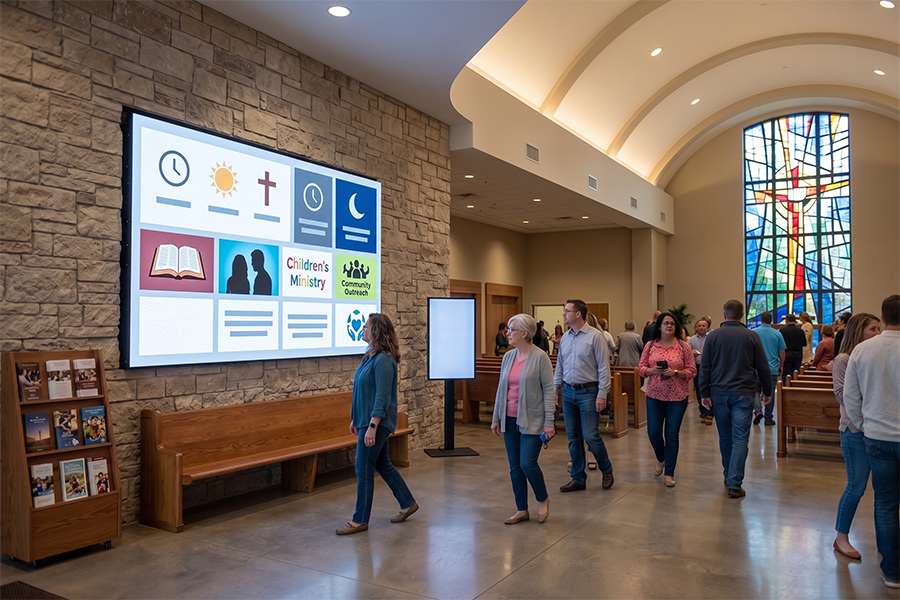
Welcome Centers & Lobbies
Engage first-time visitors immediately. Use COB digital signage to display vibrant announcements, ministry highlight reels, and campus directions in brightly lit foyers.
Expertise You Can Trust: Partner with a Source Manufacturer
Upgrading your sanctuary’s visual technology is a significant stewardship of church resources. Relying on middlemen or inexperienced vendors can lead to mismatched equipment, lack of technical support, and budget overruns.
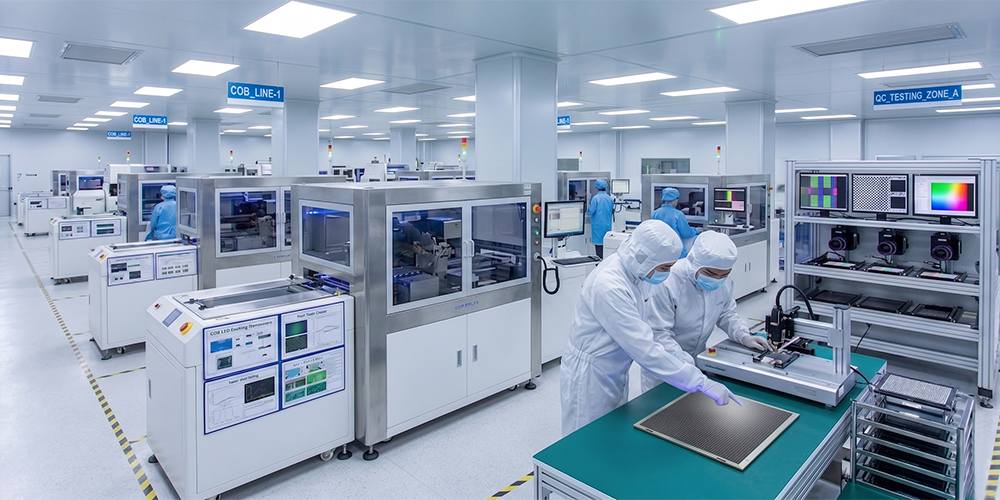
With 12 years of dedicated experience in the research, development, and production of high-definition full-color displays, we operate as a direct source manufacturer. Based in the global technology hub of Shenzhen, our state-of-the-art facilities focus heavily on the advancement of both SMD and COB/LED technologies.
- Factory-Direct Value: Because we design and manufacture the hardware directly, we eliminate middleman markups, allowing your church to access premium COB technology at highly competitive pricing.
- Rigorous Quality Control: Every module undergoes extensive aging tests and precise calibration in our clean-room environments before it ever reaches your campus.
- Custom Engineering Support: From structural CAD drawings for your specific stage architecture to remote broadcast calibration and comprehensive after-sales technical support, our engineering team partners with your church media directors from day one.
Frequently Asked Questions About Church LED Walls
What is the best pixel pitch for my church stage?
Pixel pitch determines the resolution and optimal viewing distance. For most modern church main stages using COB technology, a pixel pitch between P1.2 and P1.8 is ideal. This ensures that congregants sitting in the front rows experience no pixelation, and camera lenses can capture crisp, artifact-free text.
Is COB technology worth the extra investment over SMD?
If your church prioritizes live streaming, broadcast quality, and long-term durability, the answer is definitively yes. While the initial capital expenditure is higher, the Total Cost of Ownership (TCO) over a 5-to-10-year period is often lower due to COB’s near-zero maintenance requirements, lower power consumption, and immunity to physical stage damage.
How difficult is it to install an LED video wall?
Modern LED cabinets are designed with precision die-cast aluminum framing and fast-lock mechanisms. While structural rigging should always be handled by professionals, the assembly of the screen itself is straightforward. Furthermore, our cabinets support fully front-serviceable maintenance, meaning you never need access to the back of the screen to swap a module or power supply.
Will the screen be too bright for our sanctuary?
Absolutely not. While LED walls possess immense brightness capabilities to combat natural sunlight, they are fully adjustable. With our advanced sending controllers, your AV team can seamlessly dim the screen down to as low as 10% brightness during intimate worship moments without sacrificing color depth or grayscale performance.