
When choosing a professional LED video wall, the biggest technical debate is currently COB (Chip on Board) vs. SMD (Surface Mounted Device). While SMD has been the industry standard for years, COB technology is rapidly taking over the fine-pixel pitch market. This guide breaks down the pros, cons, and best use cases for both.
1. Technology Basics: What is the Difference?
To understand the performance difference, we must look at how they are built.
SMD (Surface Mounted Device)
SMD technology involves mounting individual LED components (cups containing red, green, and blue chips) onto a PCB board using solder. It is the most mature technology used in both indoor and outdoor screens.
COB (Chip on Board)
COB technology encapsulates the LED chips directly onto the PCB board, covered by a layer of epoxy resin or film. There are no individual “cups” or solder feet visible.
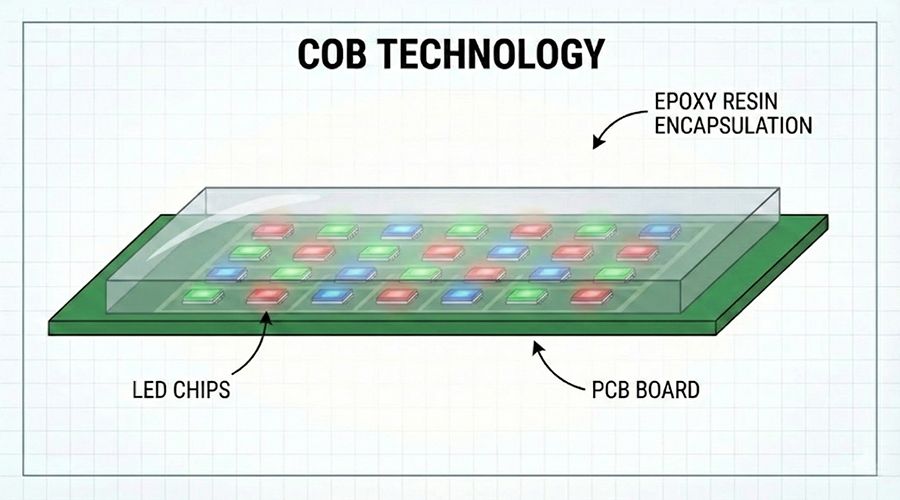
Structural difference between Surface Mounted (SMD) and Chip on Board (COB).
2. Key Performance Comparison
Pixel Pitch and Resolution
SMD struggles with pixel pitches smaller than 1.2mm due to the physical size of the LED casing.
COB shines in the “Micro LED” era. Because chips are bonded directly, COB can easily achieve pixel pitches of 0.9mm, 0.7mm, and even 0.4mm. This makes COB the clear winner for 4K and 8K home theaters or control rooms where viewers sit close to the screen.
Reliability and Protection
One of the biggest advantages of COB is durability. The resin coating makes COB displays:
- Dust-proof and Moisture-proof.
- Easy to clean (can be wiped with a damp cloth).
- Impact resistant (no delicate solder pads to break).
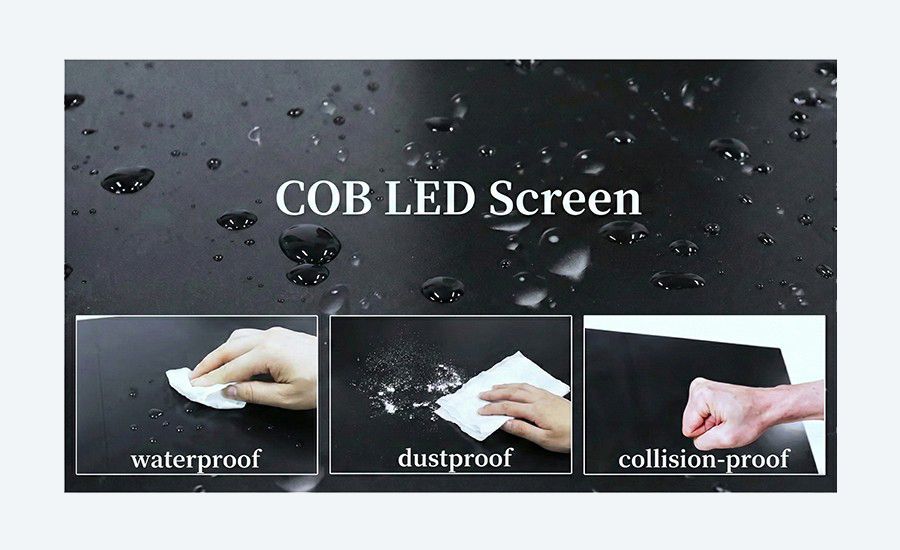
COB displays offer superior protection against collision and moisture compared to SMD.
3. Visual Experience (The “Moire” Effect)
COB LED displays provide a more comfortable viewing experience. The surface coating acts as an optical diffuser, reducing the pixelation (“granularity”) often seen in SMD screens. This results in:
- ✅ Wider Viewing Angle: Up to 170° horizontal/vertical.
- ✅ Higher Contrast: Deeper blacks due to the black resin coating.
- ✅ Less Eye Strain: Softer light emission compared to the dazzling point-source light of SMD.
Summary: COB vs SMD At a Glance
| Feature | SMD LED | COB LED |
|---|---|---|
| Pixel Pitch | Usually > 1.2mm | Down to 0.4mm (Micro LED) |
| Contrast Ratio | Standard | Very High |
| Robustness | Fragile (exposed lamps) | High (Impact/Water resistant) |
| Repairability | Easy (Replace 1 lamp) | Harder (Requires factory fix) |
| Cost | Lower | Higher |
4. Application: Which one should you buy?
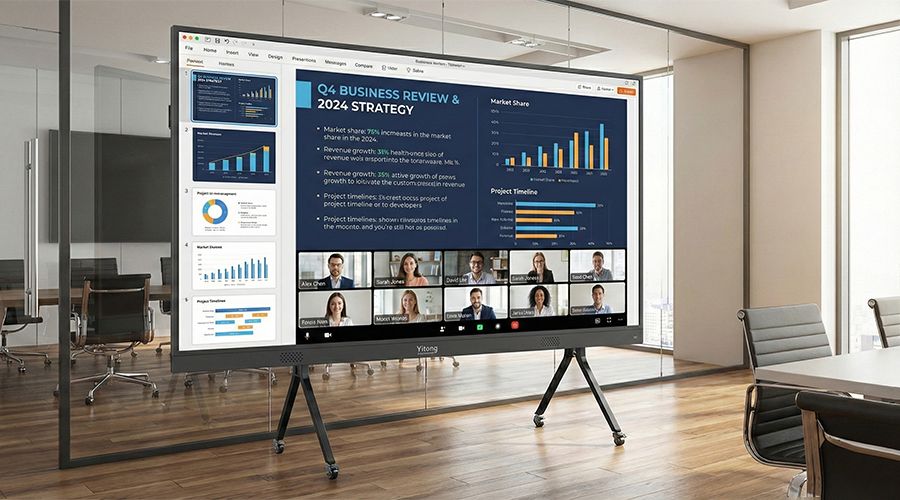
COB displays are preferred for high-end conference rooms and studios.
Choose SMD LED if:
- You have a limited budget.
- The viewing distance is far (e.g., outdoor billboards, large auditoriums).
- You need on-site maintenance capabilities.
Choose COB LED if:
- You need ultra-high resolution (P1.2 or lower).
- The screen is in a high-traffic area (requires protection from touching).
- It is for a TV studio, home cinema, or command center (requires high contrast and no moire patterns).
Need Help Choosing?
Not sure if COB or SMD is right for your project? Contact us for a free consultation.