The Definition of COB
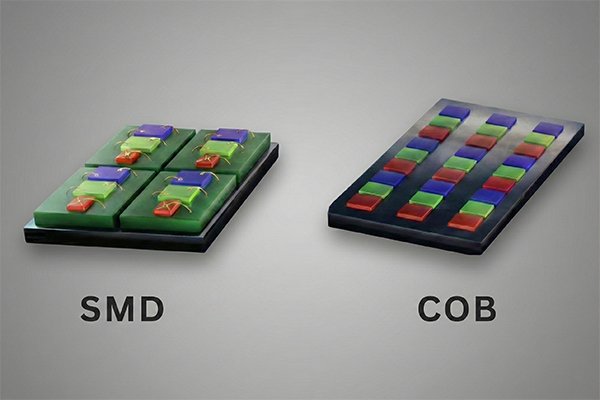
COB stands for 板上芯片. It is an advanced LED packaging technology where multiple bare LED chips are bonded directly onto a substrate (or circuit board) 形成单个模块.
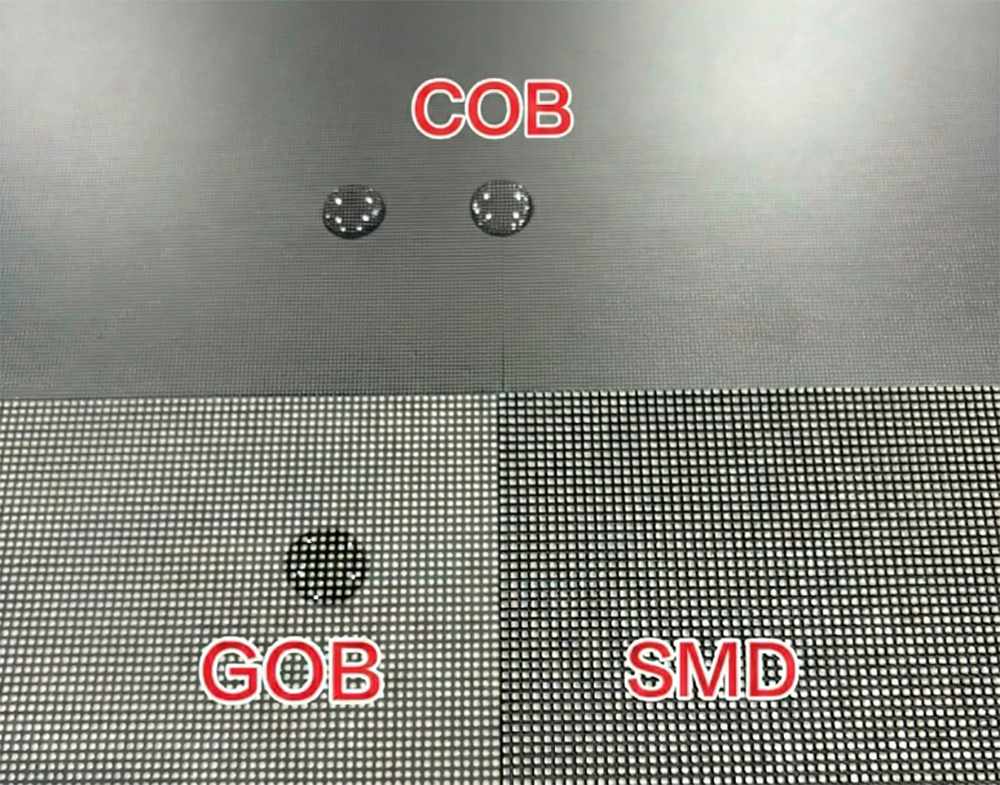
Unlike traditional packaging (where chips are placed in a cup and covered with phosphor), COB technology eliminates the intermediate packaging step. The chips are covered with a layer of epoxy or silicone resin, which acts as a protective shield and aids in light diffusion.

COB 对比. 贴片式: What’s the Difference?
| 特征 | 贴片式 (表面贴装设备) | COB (板上芯片) |
|---|---|---|
| Structure | Chip inside a casing/reflector | Chip directly on PCB |
| Light Quality | Can have visible dots (像素化) | Smooth, uniform, glare-free |
| 耐用性 | Pins can be fragile | High (Dust/Moisture/Collision proof) |
| Primary Use | General lighting, Standard displays | Fine-pitch displays, High-bay lights |
Why COB is the King of Indoor Displays
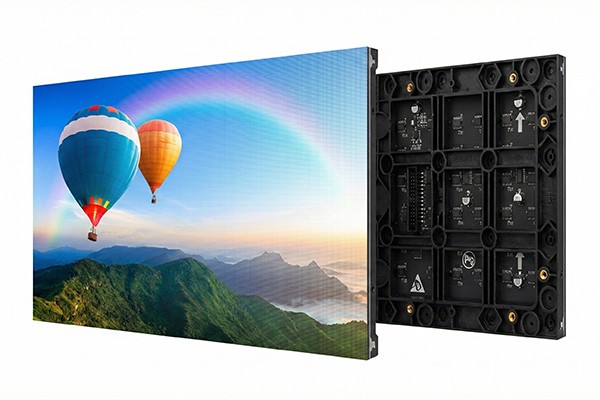
As shown in the image, COB technology is revolutionizing Indoor LED Displays. Because there are no geometric limitations of individual brackets, the pixel pitch can be incredibly small (低于P1.0).


*Typical Fine-Pitch Indoor COB Display Cabinet
Key Benefits for Screens:
2026 Evolution: Full Flip-Chip COB
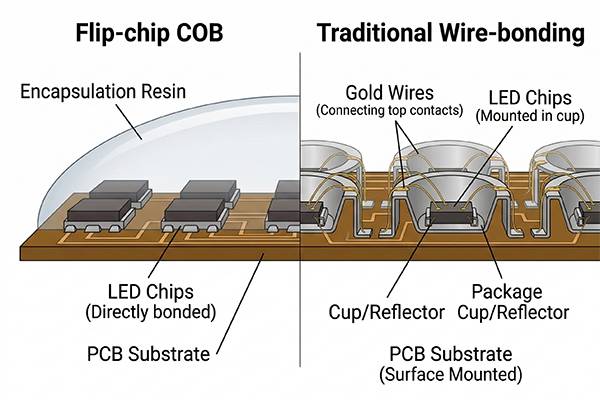
Full Flip-chip COB technology eliminates the primary cause of pixel failure by removing gold wire bonding.

*Full Flip-Chip COB technology: No gold wires, higher reliability.*
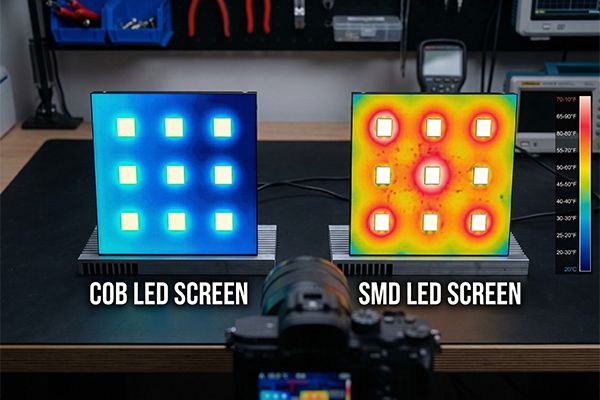
Engineering Data: Cool to the Touch
Our 2026 Common Cathode driving technology sets a new benchmark for energy efficiency.

*Internal lab test: COB maintains significantly lower surface temperatures.*
Is COB Repairable? The Truth.
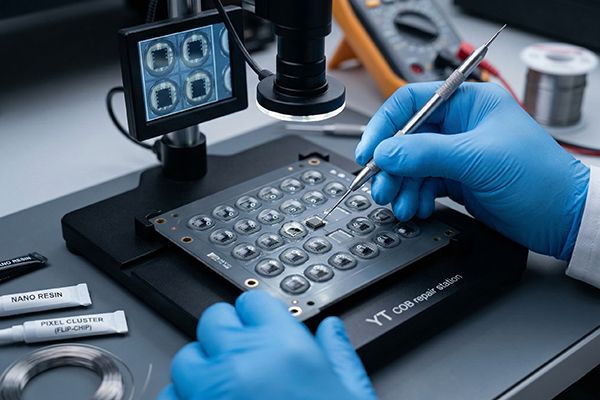
A common myth is that COB is “disposable.” At YT LED, we’ve pioneered a 3-step restoration process that restores modules to factory standards.
- Step 1: Localized thermal removal of defective pixel clusters.
- Step 2: High-precision re-bonding using Nano-encapsulation kits.
- Step 3: In-situ color recalibration for 99.9% 视觉均匀性.
Where COB Excels in 2026
COB 对比. MiP
While MicroLED (MiP) is emerging for ultra-high resolution, COB remains the gold standard for large-scale professional displays due to its proven balance of cost, yield, and durability.