As the demand for ultra-high-definition (UHD) and fine-pixel-pitch displays skyrockets, Chip-on-Board (COB) technology has emerged as a revolutionary force in the LED industry. If you are looking for a display solution that offers superior durability, exceptional visual performance, and seamless integration, understanding COB is essential.
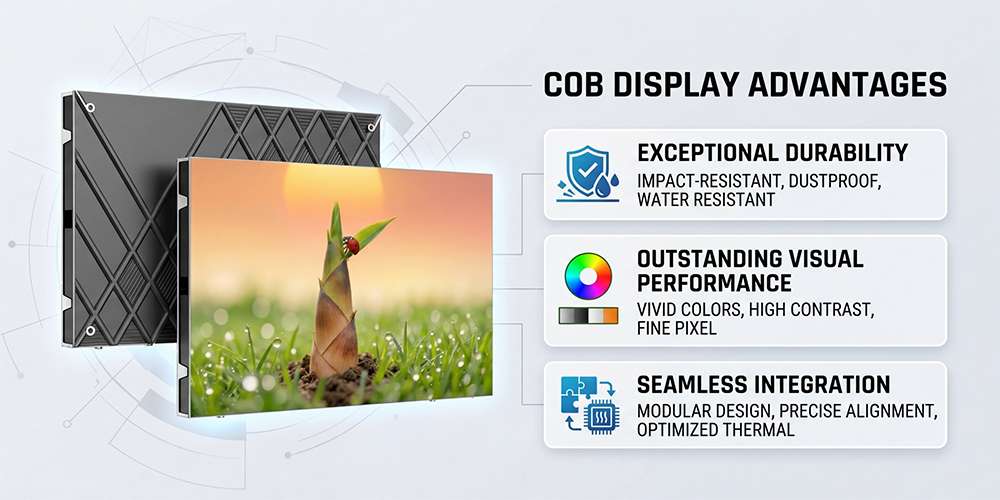
1. What is a COB LED Display?
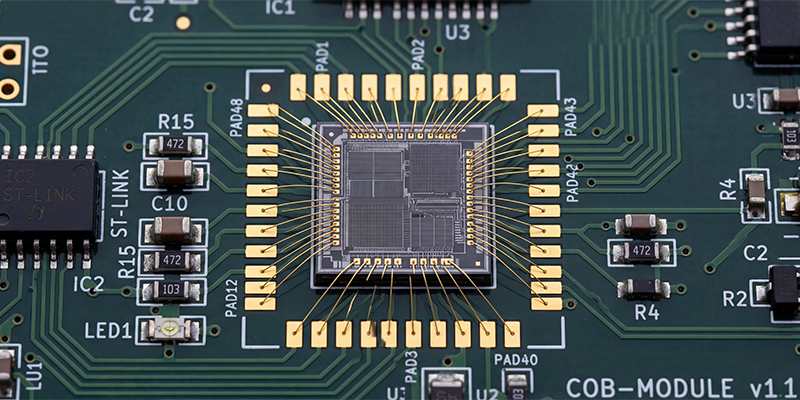
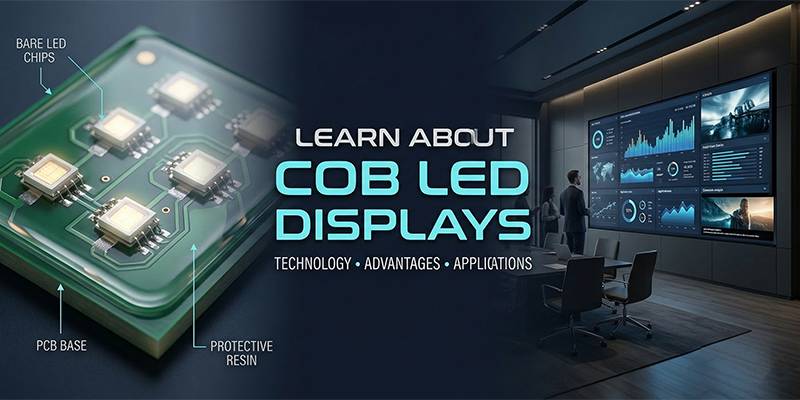
COB (Chip-on-Board) is a packaging technology where multiple LED chips are mounted directly onto a printed circuit board (PCB) to form a single module. Unlike traditional LED packaging, which encapsulates chips into individual “beads,” COB integrates the bare chips and covers them with a specialized transparent epoxy resin.
By eliminating the need for individual brackets and soldering feet, COB allows for a much higher density of LEDs, paving the way for the “Micro LED” era. It represents a shift from “discrete components” to “integrated packaging,” resulting in a smoother, more panel-like surface.
2. Characteristics of COB LED Technology
COB technology is defined by several unique characteristics that set it apart in the professional display market:
- Integrated Design: The absence of individual SMD (Surface Mounted Device) packages allows for a thinner profile and a more compact structure.
- Superior Thermal Management: Since the chips are in direct contact with the PCB, heat dissipation is significantly more efficient compared to traditional methods.
- Surface Light Source: COB transforms point light sources into a more uniform surface light source, reducing “pixelation” and providing a more comfortable viewing experience for the human eye.
- High Pixel Density: COB is the gold standard for fine-pitch displays, easily achieving pixel pitches below 1.0mm (e.g., P0.9, P0.7, and P0.4).
3. Advantages and Disadvantages of COB LED Screens
To make an informed investment, it is crucial to weigh the benefits against the technical challenges of COB technology.
Advantages
- Exceptional Durability (The “4-Anti” Protection): COB screens are waterproof, dustproof, anti-collision, and anti-static. The resin coating protects the fragile LED chips from external impact and moisture.
- Enhanced Visual Comfort: The surface light source reduces glare and eliminates the “moiré effect,” making it ideal for long-term viewing in command centers or studios.
- Higher Contrast Ratio: The dark resin coating and lack of reflective brackets allow for deeper blacks and more vibrant colors.
- Wide Viewing Angles: COB displays offer nearly 170° vertical and horizontal viewing angles without color shift.
Disadvantages
- Maintenance Complexity: Unlike SMD, where you can replace a single bead, repairing a COB module often requires specialized factory equipment to maintain color uniformity.
- Initial Cost: The high-precision manufacturing process currently makes COB more expensive upfront than standard SMD displays.
- Color Consistency Challenges: Ensuring perfect color uniformity across different batches requires sophisticated calibration technology.
4. COB LED vs. SMD LED: What is the Difference?
The choice between COB and SMD is often the biggest “pain point” for buyers. Here is a direct comparison:
| Feature | SMD LED Display | COB LED Display |
| Packaging | Individual LED beads soldered to PCB | Chips bonded directly to PCB |
| Durability | Fragile; beads can be easily knocked off | Robust; “hard” surface protection |
| Heat Dissipation | Average (passing through brackets) | Excellent (direct PCB contact) |
| Pixel Pitch | Best for >1.2mm | Optimized for <1.2mm |
| Visuals | Point light source (can be grainy) | Surface light source (smooth/soft) |
| Repairability | Easy to repair on-site | Usually requires factory repair |
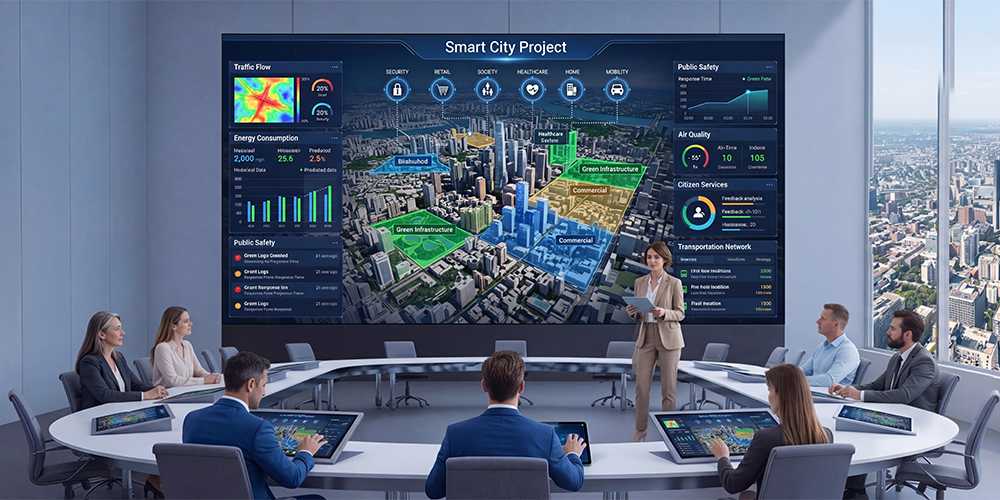
5. Applications of COB LED Displays
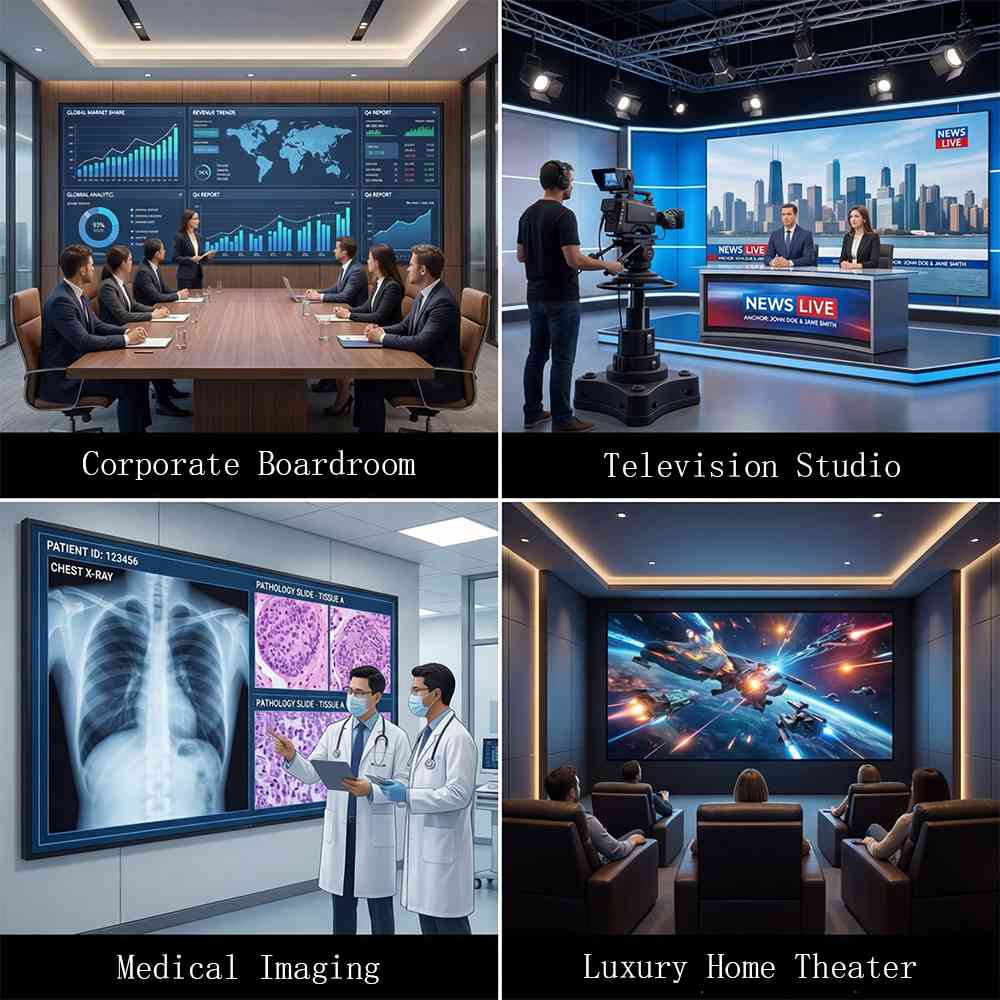
Due to their high resolution and ruggedness, COB displays are the preferred choice for high-end indoor environments:
- Command & Control Centers: Where 24/7 reliability and high-detail data visualization are mandatory.
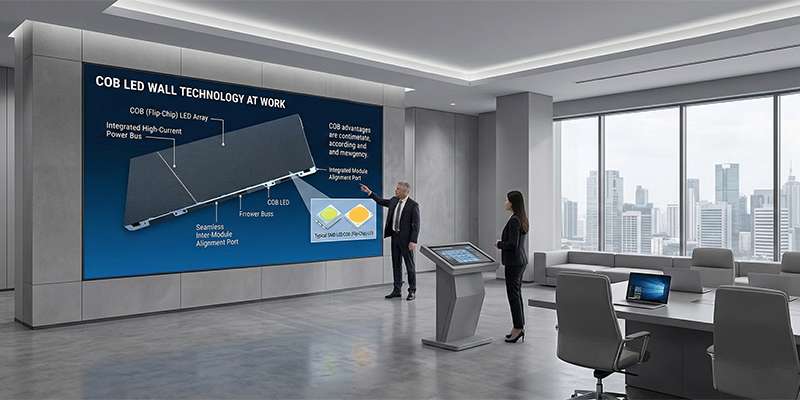
- Corporate Boardrooms: High-end meeting rooms benefit from the sleek, “TV-like” finish of COB panels.
- Television Studios: The anti-moiré properties make COB perfect for on-camera backdrops.
- Medical Imaging: The high contrast and resolution allow for the precise display of X-rays and digital pathology.
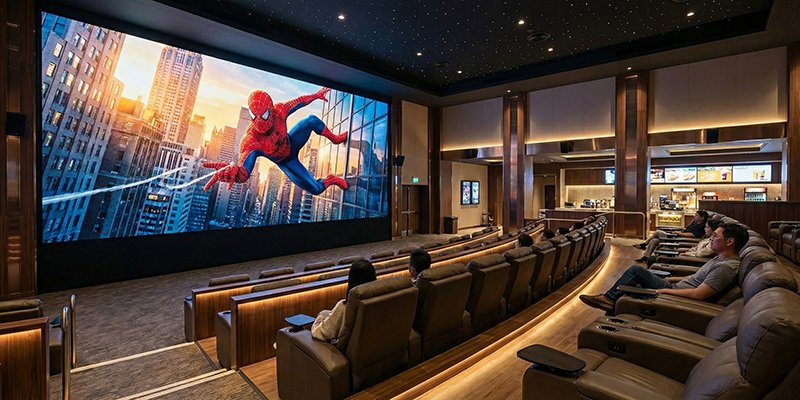
- Home Theater (Luxury): For the ultimate cinematic experience in large-scale residential settings.
6. YT COB LED Displays
As a leader in LED display manufacturing, ytledcob provides cutting-edge COB solutions tailored to global standards. ytled COB series focus on solving the traditional “uniformity” issue through advanced full-spectrum calibration.
Our COB products feature:
- Ultra-low Power Consumption: Energy-saving technology that reduces heat and extends lifespan.
- Seamless Splicing: Precision-engineered cabinets ensure zero-gap alignment for a truly monolithic screen.
- Easy Front Maintenance: Designed for quick access even in tight architectural installations.
Whether you are looking for a P0.9 or P1.2 solution, ytledcob combines technical expertise with rigorous quality control to ensure your investment stands the test of time.
7. Conclusion
Chip-on-Board (COB) technology represents the pinnacle of current LED display evolution. By solving the fragility and pixel-pitch limitations of SMD, COB provides a durable, high-contrast, and visually stunning solution for the most demanding applications.
While the repair process and initial cost remain considerations, the long-term benefits of reliability and superior image quality make COB the clear winner for any high-definition indoor project. When choosing your next display, consider the environment and the level of detail required—COB is likely the future-proof answer you’ve been looking for.
For more technical specifications or a custom quote on COB LED solutions, visit Ytledcob.
“`